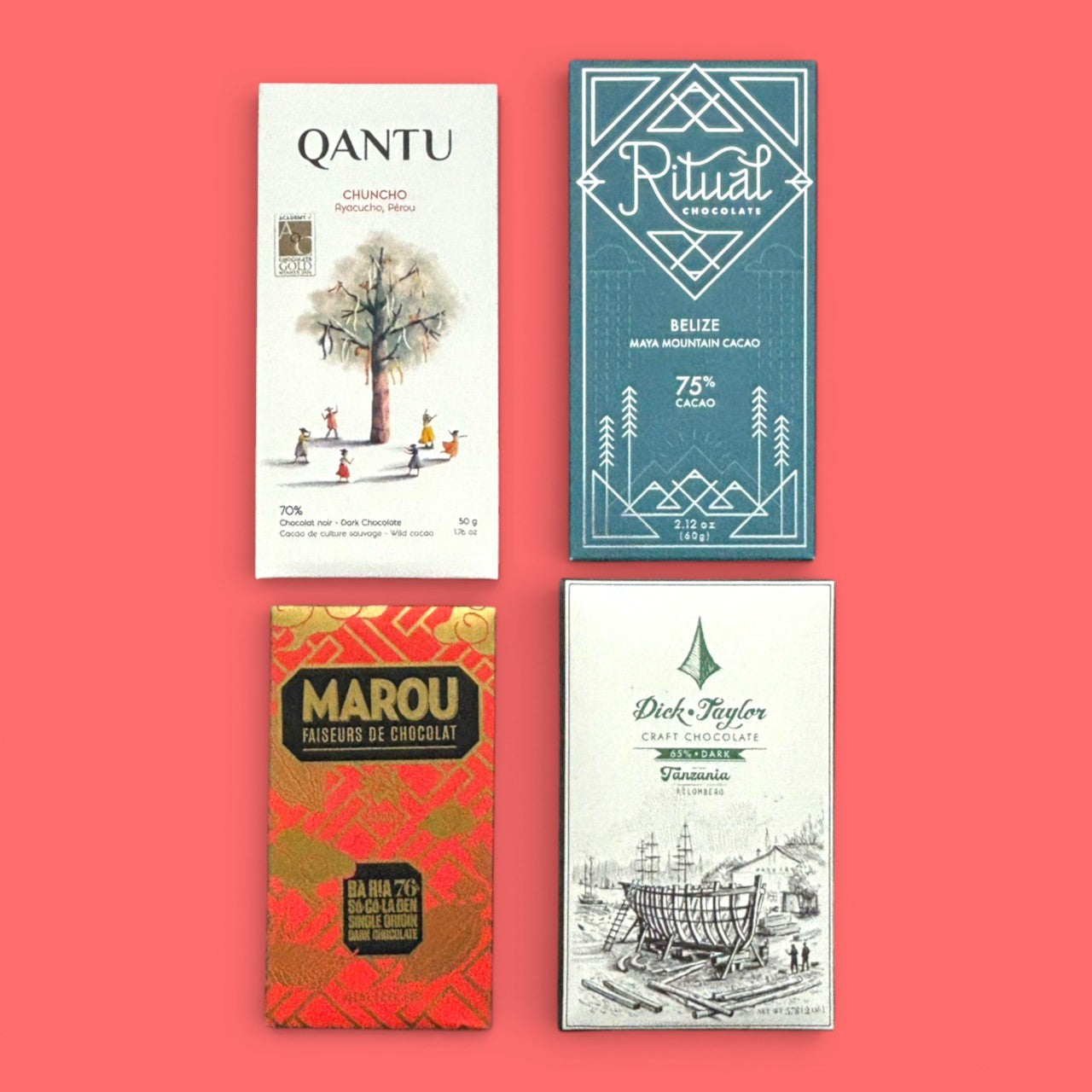
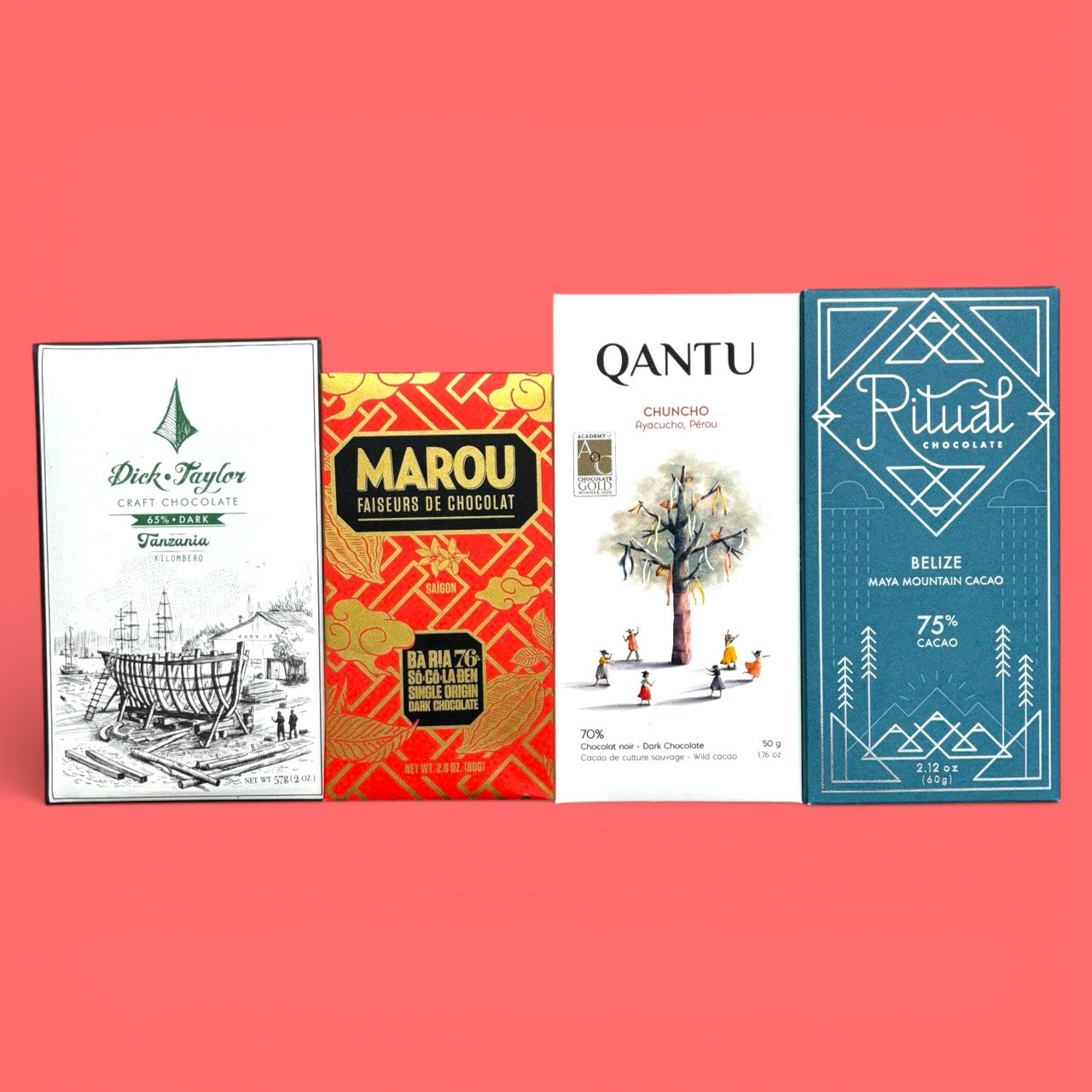
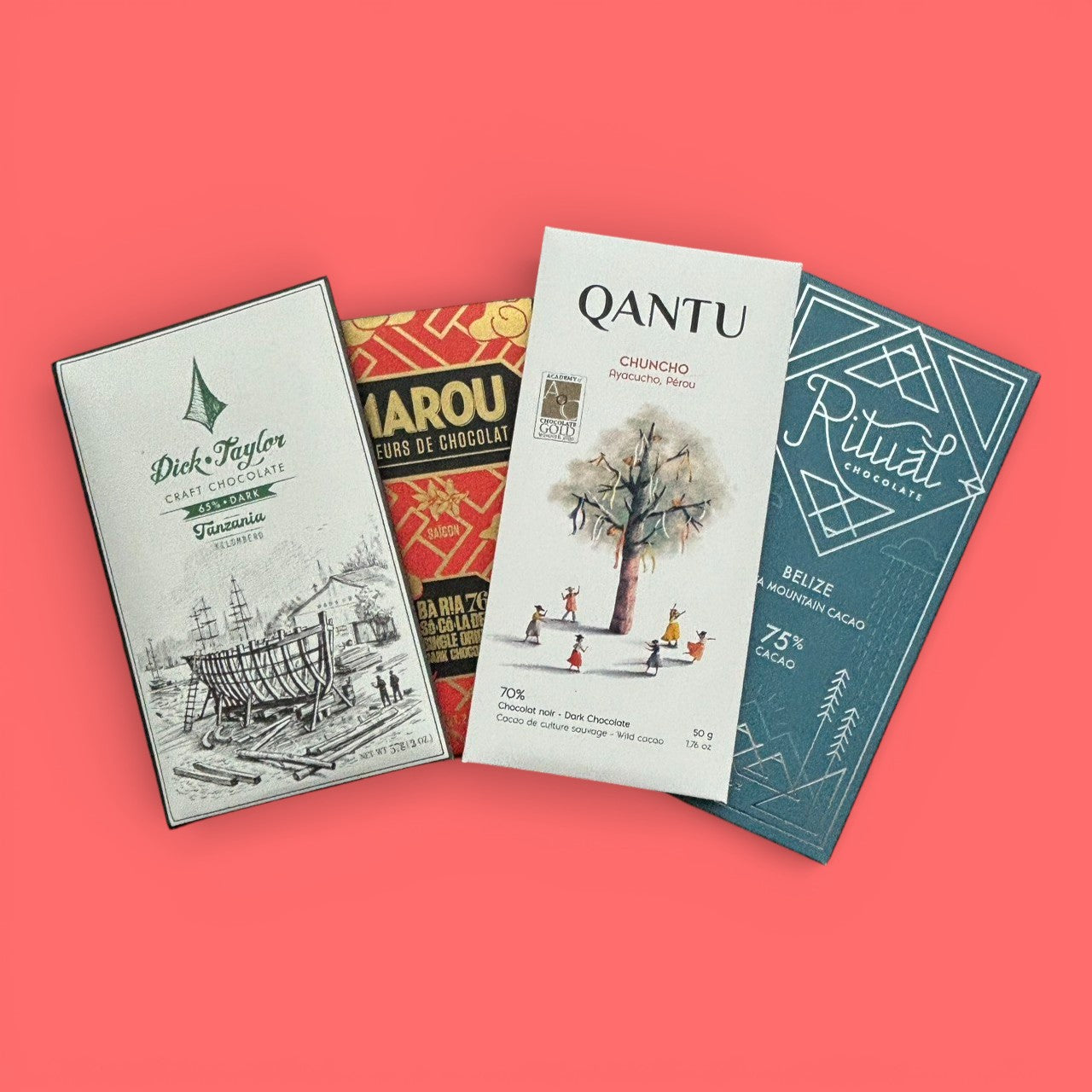

On the Caribbean edge of Central America, Belize may be small in size and population, but its cacao legacy runs deep. Belize was once Maya territory, where cacao was far more than a crop, and that ancient connection still gives Belize a singular identity among the region’s better-known chocolate origins.
Belize may not be the first country that comes to mind when people think of chocolate. However, it is a sought-after origin among bean-to-bar makers and enthusiasts.
Within the craft and bean-to-bar chocolate world, Belize has earned a strong reputation for its high-quality cacao, careful post-harvest practices, and consistently balanced flavor profile.
It doesn’t have the global reputation of places like Ecuador or Peru, nor the long-established commercial presence of West African cacao. But for those who have tasted chocolate made from Belizean cacao, the impression tends to linger. There’s a quiet confidence to it, nothing loud or aggressive, just a steady, layered expression of flavor that reveals more with every bite.
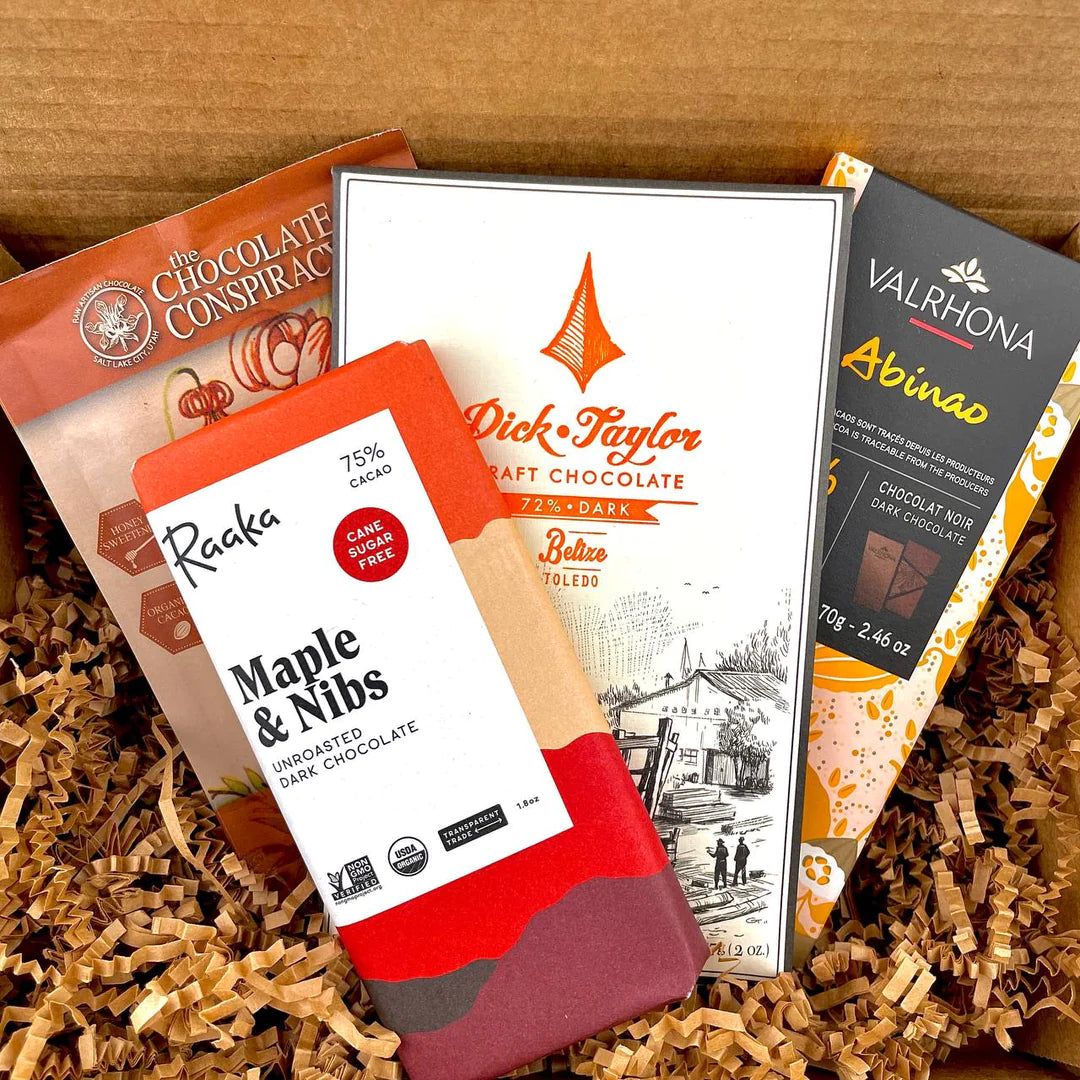
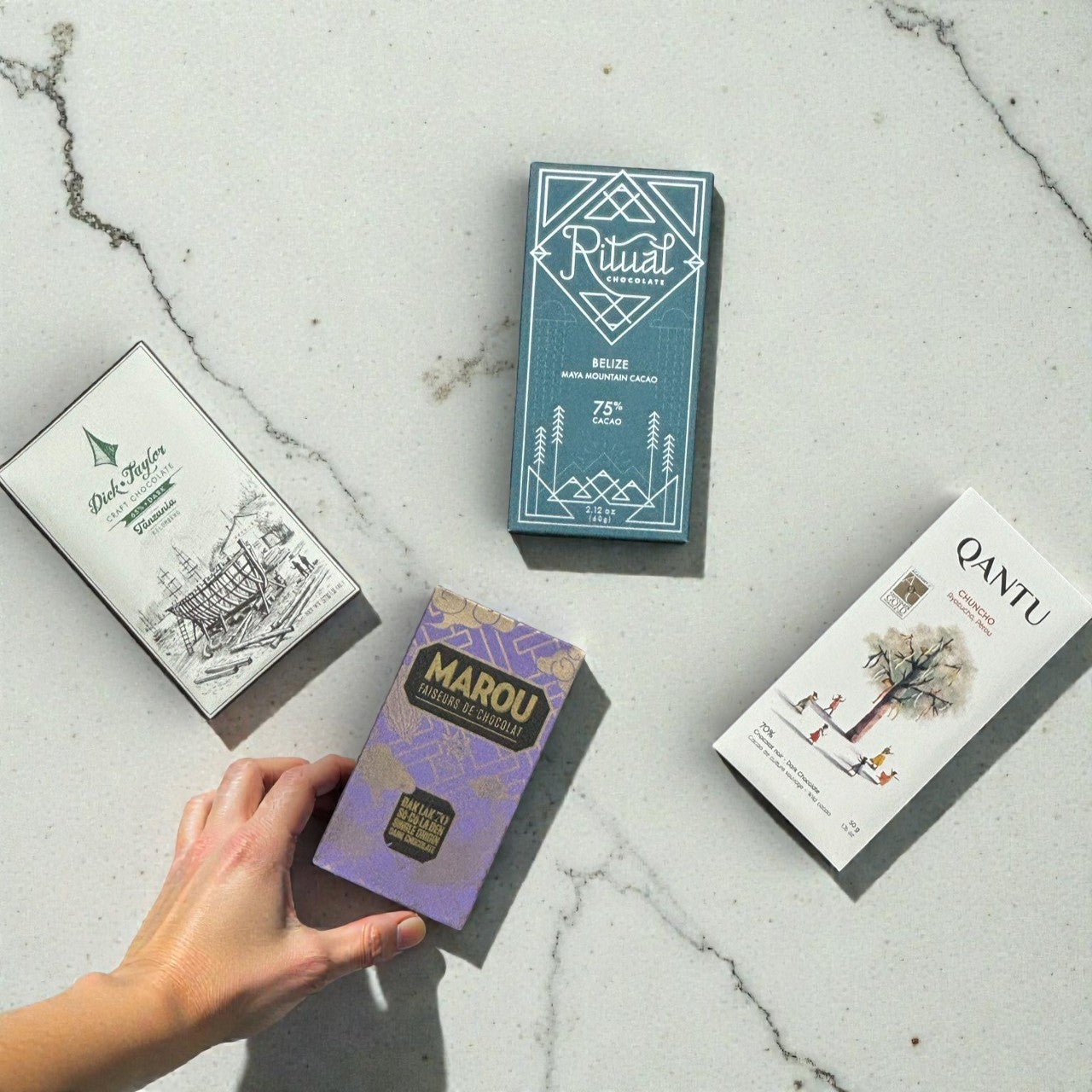
Our appreciation for Belize chocolate began with a single bar: Dick Taylor Belize Toledo. Made with just two ingredients, cacao and cane sugar, and sourced from beans grown in southern Belize, it immediately stood out. The chocolate was gentle, offering soft floral notes, dried fruit sweetness, and a rounded mouthfeel that felt both comforting and precise. It didn’t rely on sharp bitterness, heavy roast, or extreme intensity to make its point.
That first bar opened the door to an origin that consistently delivers nuance, approachability, and depth. As we explored Belize cacao through different makers and styles, the same qualities kept appearing: balance and a natural sweetness.
Cacao History in Belize
Cacao has deep roots in Belize, growing naturally in its jungles and shaping life in the region long before chocolate bars existed. For thousands of years, cacao was central to Indigenous Maya culture, not as a confection, but as a ceremonial and social staple.
Archaeological evidence of cacao beverages has been found at Maya temple sites across the country, with some of the earliest discoveries coming from northern Belize. These early preparations looked very different from modern chocolate. Cacao beans were ground with spices and mixed with water to create a traditional drink.
As Maya civilization developed, cacao became more than a ritual ingredient. It evolved into a store of value used in everyday exchange. Historical accounts suggest that just a few cacao beans could purchase basic food items, while larger quantities could be traded for livestock.
Modern cacao cultivation in Belize is now concentrated primarily in the Toledo District, a hilly, rain-rich region near the Maya Mountains. Compared with northern Belize, Toledo receives significantly more rainfall and benefits from fertile soils and dense biodiversity, conditions that cacao thrives in. Farms here are typically small, often around one or two acres, and cacao is grown alongside other crops such as rice, beans, citrus, bananas, and avocados.
The Role of Maya Mountain Cacao
The path to today’s fine Belizean cacao, however, has not been linear. In the 1980s, large-scale commercial production briefly reshaped the industry when Hershey’s established an extensive cacao operation.
At the time, yield, not flavor, was the priority. When global cacao prices collapsed and the company withdrew in the early 1990s, many farmers were left with unprofitable land and little support.
Shortly after Hershey’s left, Belize’s cacao sector was revitalized when farming communities partnered with Green & Black’s, whose early sourcing relationships helped spotlight organic production, fairer pricing, and quality improvement, repositioning Belize as a respected fine-flavor origin.
In 2010, the formation of Maya Mountain Cacao by Uncommon Cacao introduced a model that would reshape the country’s cacao sector. Until then, farmers typically fermented and dried their beans individually at home, sometimes using shared neighborhood drying decks, which made consistency difficult to achieve. By centralizing fermentation and drying, Maya Mountain Cacao unlocked far greater flavor precision and helped establish Belize as a serious craft chocolate origin. The first chocolate bar made outside Belize with 100% Belizean cacao was Mast Brothers’ Moho River bar in 2011, produced with Maya Mountain Cacao beans.
Today, the company works with more than 420 smallholder farming families across Toledo and South Stann Creek, most of them Q’eqchi’ and Mopan Maya farmers with generations of cacao knowledge. All post-harvest processing is carried out by a fully Belizean Maya team using carefully managed centralized fermentation and multi-stage sun drying. Many of the bean-to-bar makers we work with source from this network, reflecting the consistency and quality that helped put Belize firmly on the fine-chocolate map.
Fine-flavor Belize cacao is priced well above commodity cacao, and that difference plays a meaningful role in determining Belize chocolate prices at the maker level.
In 2024, Maya Mountain Cacao’s farmgate price was about $4.72 USD per kg. By contrast, even after the 2024 price shock, official farmgate prices in major commodity-producing countries were around $2.1 to $3.6 USD per kg by early 2026, underscoring how differently specialty and commodity cacao can be valued.
What Belize Chocolate Tastes Like
Belize chocolate is best known for its natural sweetness and balance. Rather than sharp acidity or heavy bitterness, it tends to lead with soft, honeyed notes and gentle dried-fruit flavors. Raisin- and fig-like sweetness are common, often layered with a subtle hint of pineapple that adds brightness without feeling sour.
Beneath the fruit, there’s usually a mild nutty character that rounds everything out. Think lightly toasted nuts or a soft malted finish rather than anything roasted or intense. The overall profile feels smooth, approachable, and comforting, with a sweetness that comes from the cacao itself rather than added sugar.
This combination of honeyed sweetness, dried fruit, and gentle nuttiness is what makes Belize cacao so versatile and so well suited to single-origin chocolate.
Chocolate Makers in Belize
For many years, Belize’s role in the chocolate world was primarily as a cacao producer, not a chocolate maker. While cacao has been grown here since the time of the ancient Maya, locally produced chocolate was limited, and the idea of craft bean-to-bar production remained rare.
Belize Chocolate Company stands out as the country’s largest local chocolate producer, turning Belizean cacao into bars and other chocolate products enjoyed by residents and visitors alike. The brand has helped raise awareness of Belize chocolate and bring locally grown cacao into retail spaces across the country.
At the same time, Belizean cacao often travels abroad, where craft and bean-to-bar chocolate makers use it mainly in single-origin chocolate bars. While Belize currently has fewer established bean-to-bar producers than neighboring countries, interest is growing as quality, awareness, and access to fine-flavor cacao improve.
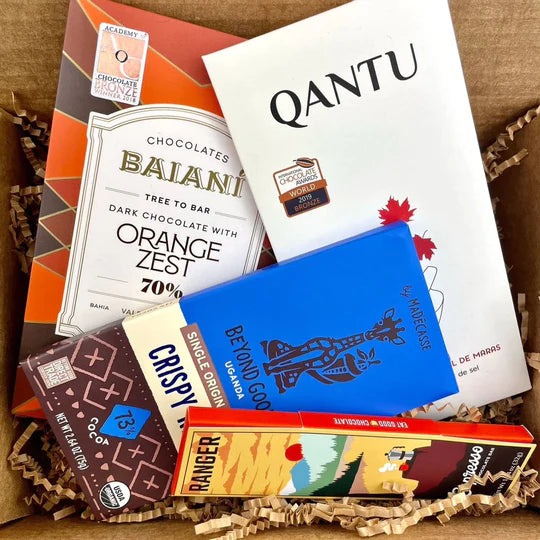
Belize cacao is shaped by centuries of tradition, thoughtful farming, and a strong sense of place. If you’re wondering where to buy Belize chocolate, we’ve curated a Belize Chocolate Collection featuring exceptional bars made with single-origin Belizean cacao. And if Belize is just the beginning, our chocolate subscription box invites you to explore a rotating selection of chocolates from different origins and terroirs around the world.